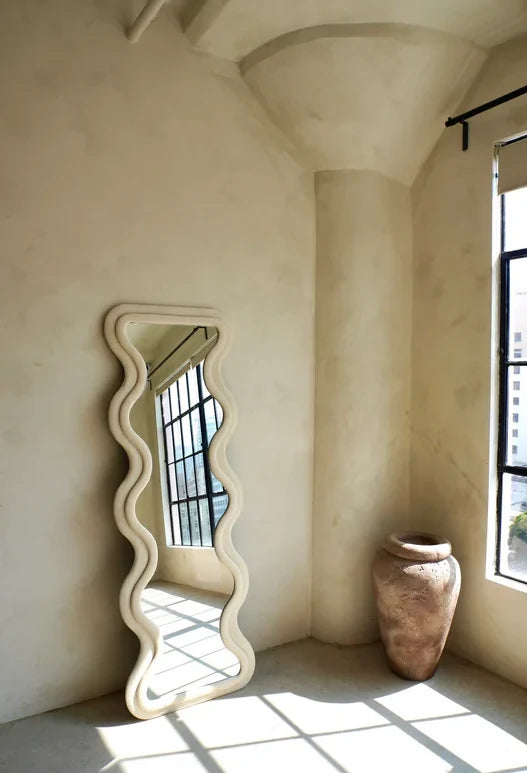
A small living room can have a strong centre without feeling crowded. Sometimes the most memorable element is a coffee table whose outline changes as you move around it: a carved volume, a curved plane or a top balanced on an unexpected base. Choosing a sculptural coffee table for a small living room begins with the space around that form. Its visual interest should accompany ordinary activities, from setting down a cup to passing between the sofa and the door. The aim is a piece that contributes character while keeping the room easy to inhabit.
Understand the footprint in use
Begin with the seating arrangement and the routes people actually take. The coffee table needs to be reachable from the seats it serves without obstructing the natural path through the room. Draw its widest points on a floor plan, including any curved projections that are easy to overlook in a front-facing photograph. Then mark the outline at full size with paper or tape. Sit down, stand up and move through the space. A sculptural form often reveals its practical implications more clearly in these small movements than in a product image.

Consider visual weight alongside dimensions
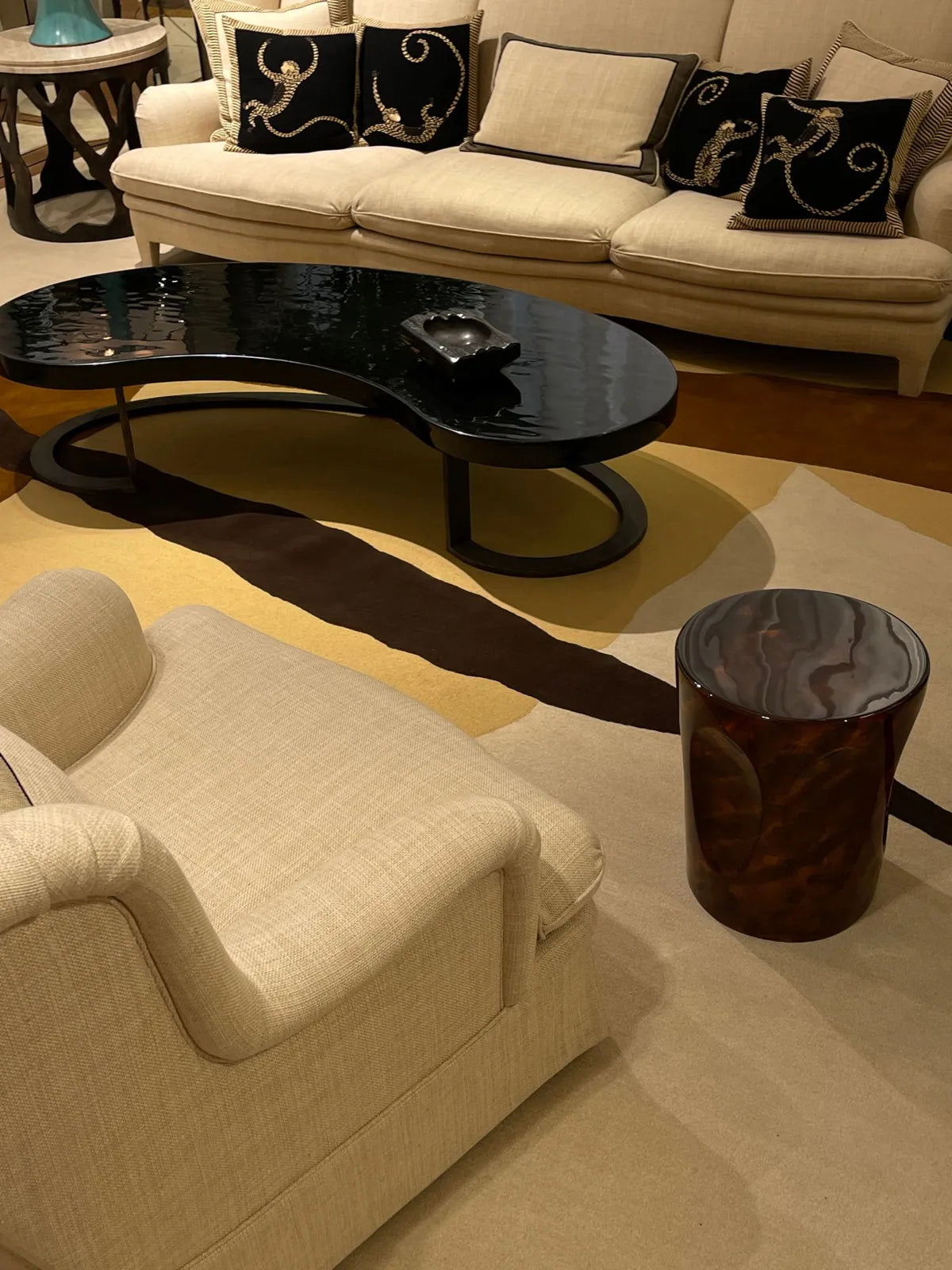
Two tables with similar measurements can occupy the eye very differently. A solid plinth creates a continuous volume, while an open base allows views through to the floor. Neither is automatically better for a small room; the relationship depends on the sofa, rug, daylight and surrounding furniture. A grounded piece may bring welcome definition to a lightly furnished space. A more open form may preserve an important sightline. Compare the table from the doorway and from a seated position, noticing how its silhouette participates in the whole arrangement rather than judging it in isolation.

Look for a useful surface
An irregular tabletop can still offer a comfortable place for the things you use every day. Check how much level, usable area remains once the expressive outline has been taken into account. Imagine a tray, a book and a pair of cups together, then consider whether the surface can be reached comfortably from different seats. Ask about the care requirements and stability of the specific design. A table earns its place through repeated use. Its artistic presence can become more satisfying when the practical details have been resolved with equal care.
Give the form a readable setting
A distinctive table does not require an empty room, but it benefits from surroundings that let its outline remain legible. Consider the interaction between the table's pattern and the rug beneath it. A lively stone surface may sit comfortably over a quieter textile, while a simple timber form can hold its own against a more expressive weave. Keep the objects on top relevant to how you use the room. A small group can provide scale without concealing the design. Allow the composition to evolve rather than treating it as a permanent display.

Explore alternatives to one central piece
Some small rooms work better with two movable side tables, a nesting arrangement or a compact table placed slightly off centre. These options can preserve flexibility while still introducing a sculptural element. Think about whether you regularly need to clear the middle of the room or bring a surface closer to a particular seat. For example, two compact timber tables may let a household clear a play area more readily than one fixed central volume. Check the weight and handling requirements before assuming that any piece will be easy to move. The right arrangement follows the household's habits, with visual interest distributed in the places where it can be enjoyed and used.

Choose a piece you can live around
Before ordering, confirm the dimensions, material description, finish and delivery access with the supplier. Consider the edges and projections in relation to children, pets or any particular needs within the household. Then return to the room itself: does the proposed piece make the seating area feel more coherent? A successful sculptural coffee table can give a small interior a sense of identity without asking it to become a gallery. Its shape becomes familiar through daily movement, appreciated from the sofa, the doorway and the ordinary route between them.
Editorial photographs illustrate materials and settings; pictured objects and interiors are not presented as Lise Luxury products or commissions.