A dining table can fit a room on paper and still feel slightly wrong when the chairs are pulled out. Perhaps its base interrupts the place where someone naturally sits, or its length leaves too little room beside a doorway. This is often where the conversation about bespoke furniture begins: with an ordinary difficulty that deserves a particular answer. Bespoke, custom and made-to-measure furniture all suggest some freedom beyond a standard catalogue. Understanding what a maker means by those words helps turn that freedom into a clear, manageable project.

Start with the scope, rather than the label
In common commercial use, made-to-measure usually describes an established design adjusted to particular dimensions. Custom furniture may offer a wider menu of changes, including timber, upholstery, hardware or configuration. Bespoke often suggests a piece developed around a specific brief, potentially involving new drawings and construction decisions. These are useful distinctions, but suppliers do not apply the terms uniformly. Ask what can change, what must remain fixed and which decisions require additional design work. For example, a scope might approve a shorter top on an existing base, or commission a newly designed base with its own drawing stage. The written scope explains which process is actually included.

When an existing design provides the answer
There is considerable value in beginning with a design whose proportions you already enjoy. A console might need to become narrower, a table slightly shorter, or a cabinet better suited to the height of a particular wall. Adjustments can preserve the character of the original while improving its relationship with the room. They also need thoughtful checking: changing one dimension may affect a base, internal storage or the balance of the whole. Ask the maker to show the revised proportions together, rather than approving a list of isolated measurements.

When the brief calls for something new
A more individual commission becomes useful when the problem involves several relationships at once. Imagine a dining table that needs to seat a wheelchair user comfortably, fit an irregular room and work with a particular set of chairs. The design discussion should begin with those requirements, followed by material, appearance and construction. A designer or maker can then explain what the proposed solution involves. This is an opportunity to make daily life easier through a carefully developed object, with its visual character growing from a brief that has genuine purpose.
Let samples and drawings do different jobs
A drawing helps establish size, configuration and the position of important details. A physical sample lets you judge colour, texture and the way a surface responds to the light in your home. Neither completely replaces the other. Place finish samples beside the floor, fabrics and objects that will remain, and ask which variations are normal in the chosen material. With natural timber and stone, a small sample cannot promise an identical pattern across a larger piece. Record the approved references and clarify how the actual material will be selected before fabrication begins.

Agree what happens after approval
The most reassuring commissions make responsibility visible. Establish who checks site measurements, when drawings become final, how revisions are handled and what triggers the production period. Ask about delivery access, assembly, installation and care at the same time as the piece itself. A change made after materials have been ordered can have different implications from one discussed at the first sketch. These questions support a constructive relationship with the maker. They allow both sides to understand what has been agreed and what still needs a decision before work proceeds.
A piece that belongs to its setting
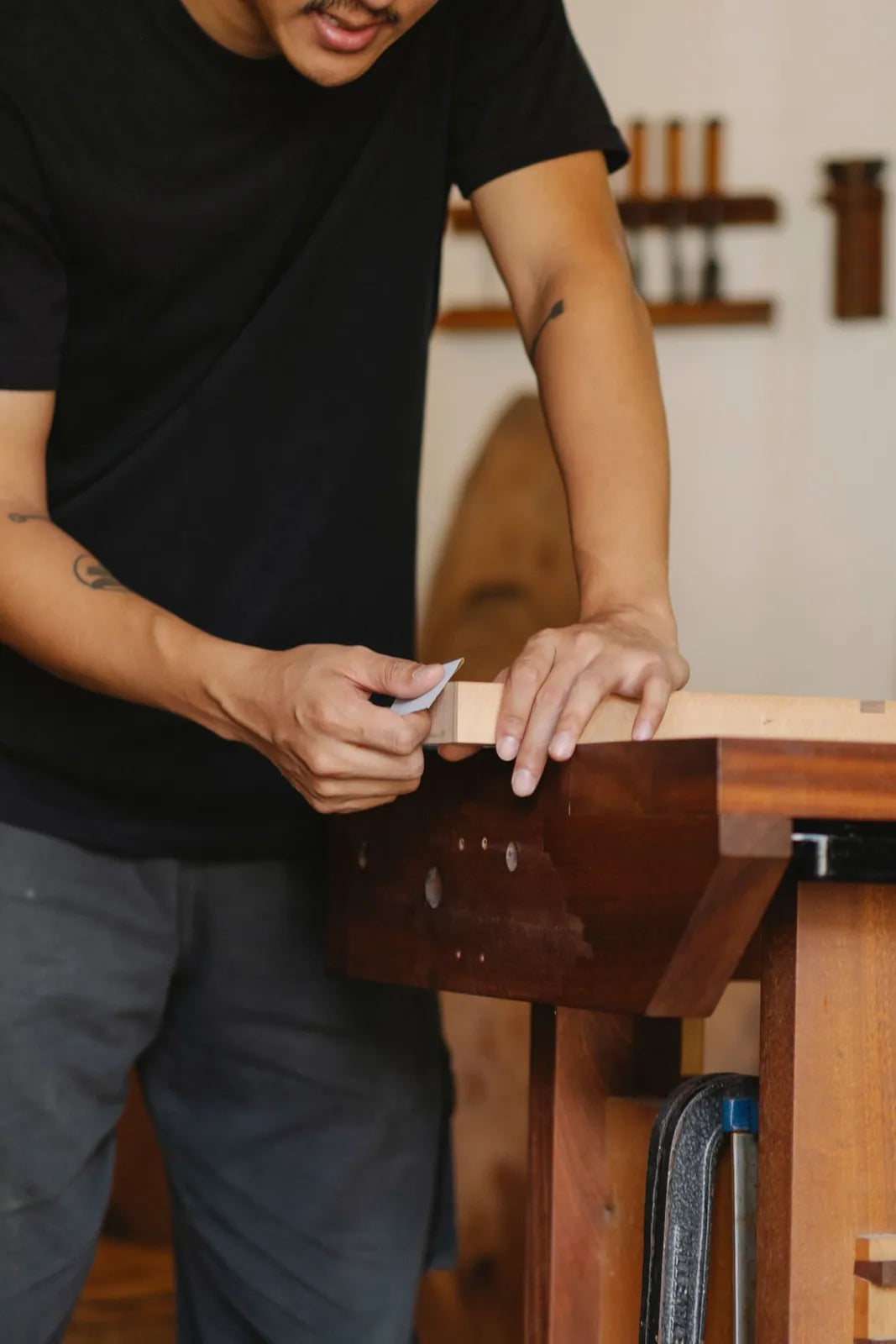
The right level of customisation is the one that resolves your actual needs. Sometimes a different finish is sufficient; sometimes an established design needs a new size; sometimes a room invites an entirely new object. Think about the mornings, gatherings and small routines that the furniture must accommodate, then choose the process that serves them. A successful commission can be appreciated in its smallest practical details: a chair that moves freely, a drawer that opens comfortably, a surface that feels right beneath the hand. Those relationships give the finished piece its place in the home.
Editorial photographs illustrate materials and settings; pictured objects and interiors are not presented as Lise Luxury products or commissions.