An accent chair can become the place a room quietly revolves around. Its back may form a generous curve, its frame may reveal a precise line, or its upholstery may bring a new texture beside familiar furniture. A sculptural accent chair offers those visual pleasures while promising something more personal: a place to settle. Choosing one works best when the body and the room are considered together. The chair should be interesting from the doorway, comfortable for its intended user and useful in the activities that will give it a continuing place in the home.
Decide what the chair is for
Reading, conversation and occasional seating each suggest different priorities. A chair used for long evenings may call for a particular back angle or arm position, while one drawn into a gathering needs to relate comfortably to the sofa. Consider who will use it most often, including any mobility or support needs. If possible, sit in the specific design for long enough to notice how it accommodates your posture; online buyers should check the supplier’s actual trial and returns terms before ordering. Seat depth, firmness and height work together. A strong silhouette becomes an enduring pleasure when the chair supports the way you actually want to sit.

Look at the back as carefully as the front
A chair placed away from the wall is experienced as an object in the round. Its back, frame and junctions become part of the route through the room. View product photographs from several angles or inspect the piece in person where possible. Notice how the upholstery meets the structure and how the chair sits on the floor. A low profile may preserve a sightline, while a taller back can give a corner a more enclosed character. These are relationships to explore within the actual setting, rather than fixed rules about which shape is best.

Give it enough space to work
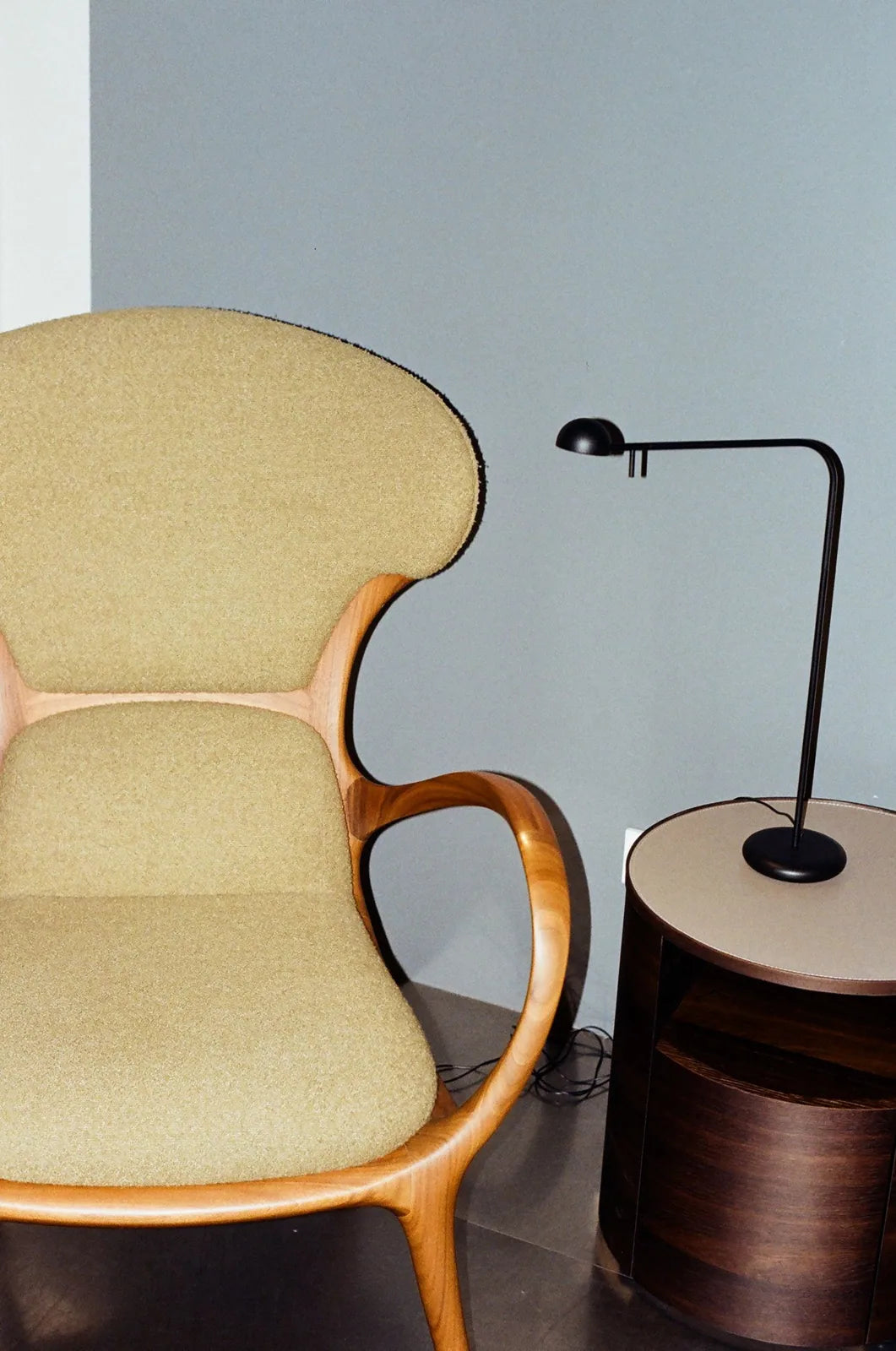
Mark the chair's full footprint, including a swivel range or reclining movement where relevant. Think about the approach to the seat and the space needed to stand up comfortably. A chair can appear compact while its curved back extends further than expected. Add the side table, lamp or footstool that will complete the setting, then review circulation around the whole group. The chair's practical territory is larger than its base. A measured plan helps protect that territory without making the room feel as though every object has been pushed to its edges.
Let upholstery contribute a different quality
Fabric and leather change how a sculptural form is perceived. A highly textured weave can emphasise softness, while a smoother surface may make the outline more legible. Request samples and look at them in the room's changing light. Ask the supplier about suitability for the intended use, cleaning instructions and any relevant performance information. Avoid judging durability by a material name alone, since construction and finish vary. The right choice should support both the chair's character and the household's expectations, allowing the surface to be appreciated without uncertainty about its care.

Bring it into conversation with existing furniture
An accent chair can introduce a new form without repeating every material in the room. Look for a relationship through scale, tone or one small detail, then allow the piece to retain its individuality. A curved chair might soften the setting around a rectilinear sofa; an exposed timber frame might echo an existing cabinet. Test the arrangement from several seats and doorways. Consider whether people can converse easily across the grouping. The most appealing composition often becomes clear through small adjustments, with the chair angled towards an activity rather than positioned only for a photograph.

Let familiarity become part of the design
The chair's final role will emerge through use. A book may remain beside it, a throw may acquire a practical place, or the morning light may make it the preferred seat at a particular hour. These ordinary associations give a distinctive object a deeper kind of presence. Before ordering, resolve dimensions, delivery access, care and the supplier's specifications, then leave some freedom in how the setting develops. A sculptural accent chair can contribute a memorable outline from the beginning and gain meaning through the time someone chooses to spend in it.
Editorial photographs illustrate materials and settings; pictured objects and interiors are not presented as Lise Luxury products or commissions.